Blog
Pour-Over Brewing: Step-by-Step Guide

☕ Pour-Over Brewing: Step-by-Step Guide
If you love clean, bright, and aromatic coffee, pour-over brewing is your best friend. Unlike immersion methods like the French press, pour-over lets water flow continuously through the grounds, highlighting subtle flavors and aromas.
It’s a favorite among coffee enthusiasts because it’s simple, affordable, and precise. Here’s everything you need to know to brew the perfect cup.
🛠 What You’ll Need
-
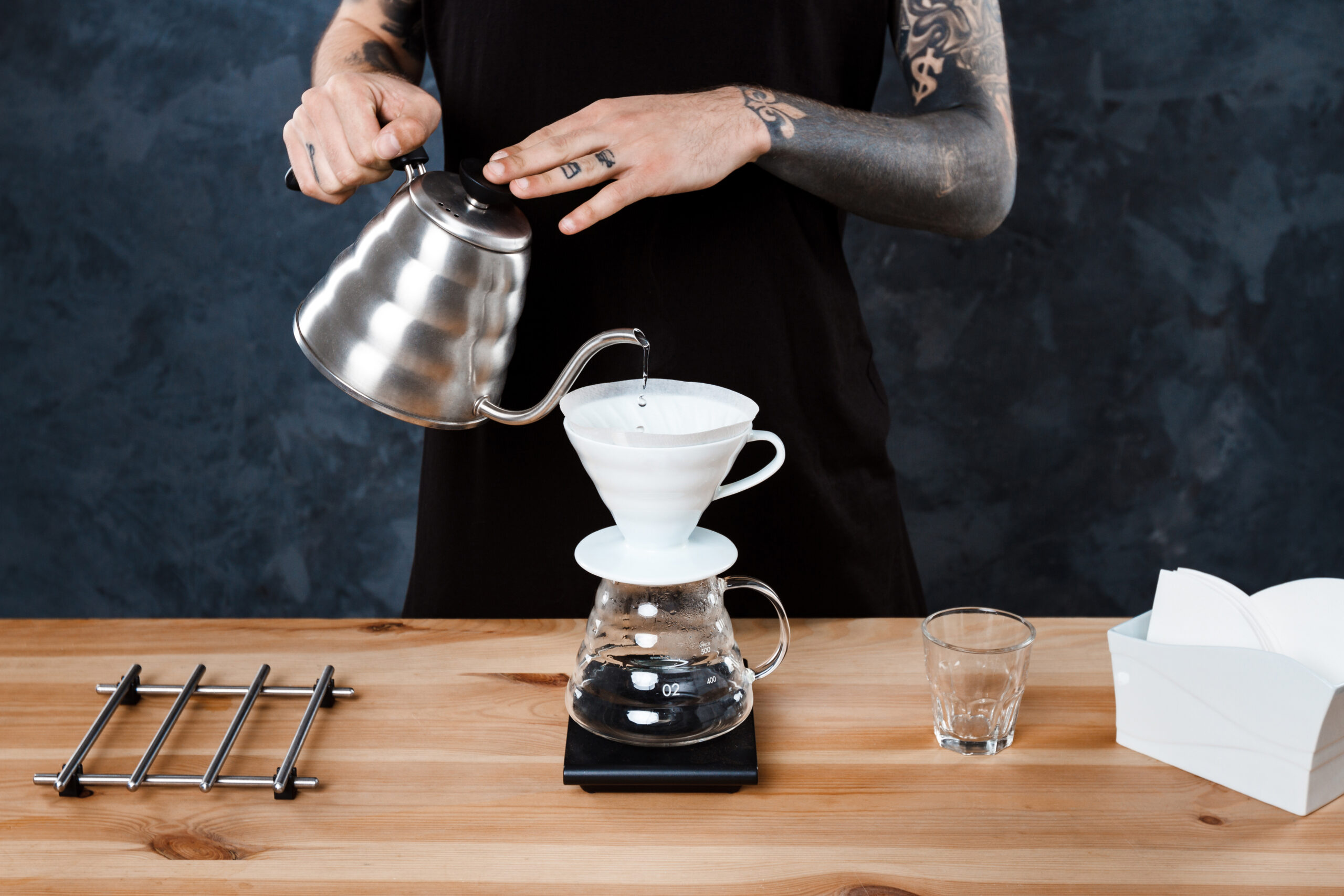
Pour-over dripper (Hario V60, Kalita Wave, Chemex, etc.)
-
Paper filter
-
Freshly roasted coffee beans
-
Burr grinder
-
Kettle (gooseneck preferred for control)
-
Scale & timer
-
Mug or carafe
📏 Coffee-to-Water Ratio
A reliable starting recipe is 1:16 → 15 g coffee to 240 g water.
👉 Adjust strength to taste — stronger = more coffee, lighter = less.
🔑 Step-by-Step Brewing Guide
1. Heat Your Water
-
Heat water to 92–96°C (195–205°F).
-
Boil and rest for 30 seconds if you don’t have a thermometer.
2. Grind Your Coffee
-
Use a medium-fine grind, about the texture of table salt.
-
Consistency is crucial for even extraction.
3. Prepare the Filter
-
Place your filter in the dripper.
-
Rinse with hot water to remove paper taste and warm the brewer.
-
Discard rinse water.
4. Add Coffee & Bloom
-
Add ground coffee and gently shake to level the bed.
-
Start the timer.
-
Pour 2–3x the coffee weight in water (e.g., 30–45 g for 15 g coffee).
-
Let it bloom for 30–45 seconds — this releases CO₂ and improves flavor.
5. Main Pour
-
Slowly pour water in spirals from the center outward, avoiding the edges.
-
Pour in stages (2–3 pulses) until you reach total water weight (240 g).
-
Aim to finish pouring around 2:00–2:30 minutes.
6. Drawdown & Serve
-
Let the water drain through completely (about 3:00–3:30 minutes total).
-
Swirl the carafe gently to mix before serving.
-
Enjoy your clean, aromatic cup!
⚡ Pro Tips
-
Control flow → Gooseneck kettles give precision, preventing uneven extraction.
-
Experiment with grind → If the brew is sour, grind finer; if bitter, grind coarser.
-
Water matters → Use filtered water for the cleanest taste.
-
Try different beans → Fruity African coffees shine in pour-over.
❌ Common Mistakes
-
Skipping the filter rinse → paper taste in your cup.
-
Pouring too fast → under-extracted, sour coffee.
-
Pouring only in the center → channels water, uneven brew.
🌟 Final Thoughts
Pour-over brewing is simple yet rewarding. With just a bit of practice, you’ll be able to highlight the natural flavors of your beans and impress friends with café-quality coffee at home.
So grab your dripper, kettle, and fresh beans — your perfect pour-over awaits!